What If Scanner and Print “Drivers” Lived Inside the Machine like Robots already do?

For decades, we’ve accepted a fundamental limitation in how we interact with devices: the need for external drivers. Install this. Update that. Hope it works with your operating system. Repeat.

It made sense… in the 1990s.

But in a world now defined by robotics, AI, and distributed systems, this model isn’t just outdated—it’s actively slowing innovation.

Let’s challenge the assumption.


The Old Model: External Dependency

Traditional drivers live on a host computer. They translate commands between software and hardware. But this creates friction:

  • OS dependencies
  • Version conflicts
  • Security vulnerabilities
  • Endless maintenance cycles

Every new device becomes a compatibility puzzle. Every update risks breaking something that used to work.

This isn’t scalable for a future filled with autonomous robots and billions of IoT devices.


The Shift: Intelligence Moves Inside the Device

Now imagine a different model:

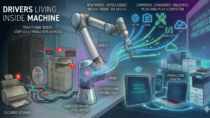
The “driver” doesn’t live on your computer. It lives inside the device itself.

The robot, scanner, or printer becomes self-describing, self-serving, and directly accessible over standard protocols.

No installs. No dependencies. No translation layers.

Just capability exposure.

We’re already seeing this shift happen:

  • Document scanning evolved with driverless, network-native approaches
  • Office print and capture workflows are moving toward platform-independent communication models
  • IoT devices increasingly expose RESTful or API-based interfaces

This is not theoretical—it’s happening.


Why This Matters for Robotics

Now extend this concept to robots.

Today, robotics development is fragmented:

  • Custom SDKs
  • Vendor-specific APIs
  • Complex integration layers

What if every robot exposed a standardized, self-contained interface?

  • Discoverable over the network
  • Controllable via universal APIs
  • Independent of OS or local drivers

Now developers don’t “install” a robot.

They simply connect to it.

This unlocks:

  • Faster integration
  • Cross-platform interoperability
  • Plug-and-play automation ecosystems

The Bigger Opportunity: A Universal Standard

We’ve seen what happens when industries align around a common standard:

  • The web exploded with HTTP
  • Mobile apps scaled with consistent APIs
  • Cloud computing thrived on shared protocols

Now imagine that same consensus applied to:

  • Robotics
  • Workplace print
  • Production print
  • Monetizing Scanners Printers and Robots (IoT) with TWAIN standards

A universally accepted, device-embedded “driver” model would:

  • Eliminate integration friction
  • Reduce development costs
  • Accelerate time-to-market
  • Enable entirely new categories of applications

From Drivers to Capabilities

The real shift here isn’t technical—it’s philosophical.

We’re moving from:

👉 “Install this driver so your computer can understand the device”

to:

👉 “The device already knows how to communicate—just ask it what it can do”

That’s a fundamentally different world.


The Call to Action

The technology pieces already exist. What’s missing is industry alignment.

If robotics, workplace print, and production print stakeholders can come together around a driverless, device-native standard, we won’t just improve integration…

We’ll redefine it.

And the pace of innovation? It won’t just increase—it will compound.


The question isn’t whether this shift will happen. It’s who will lead it.
Why Document Scanners, MFPs, and Robots Are Sitting Ducks in a Post-Quantum World

Most organizations still treat scanners, MFPs, and even service robots like harmless office equipment.

But here’s the reality: they process some of your most sensitive data—and they’re among the easiest systems to compromise.

Now layer in what’s coming next.

Q-Day Is Closer Than Most People Think

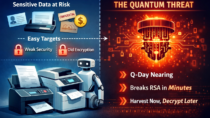
“Q-Day” refers to the moment when quantum computers can break today’s standard encryption.

While no one knows the exact date, the consensus across governments and industry is clear:

  • Google is now warning that quantum computers could break current encryption by 2029
  • That’s a shift from earlier expectations of the mid-2030s
  • Experts already estimate a meaningful probability before 2035

That timeline matters because your devices will still be in use when it happens.

Today’s Encryption Has a Shelf Life

Most scanners, MFPs, and connected robots rely on encryption like RSA or ECC.

Here’s the problem:

  • Traditional computers would take thousands to millions of years to break strong RSA encryption
  • A quantum computer running Shor’s algorithm could potentially break it in hours—or even minutes once scaled

That’s not an incremental improvement. That’s a complete collapse of the current security model.

“Harvest Now, Decrypt Later” Is Already a Real Threat

Attackers don’t need to wait for Q-Day.

They can:

  1. Intercept encrypted data today
  2. Store it indefinitely
  3. Decrypt it later when quantum capability is available

So every document scanned today—contracts, IDs, financial records—could be exposed in the future if it’s protected with today’s encryption.

Why Scanners, MFPs, and Robots Are Especially Vulnerable

These devices are uniquely exposed:

  • They handle high-value, long-lived data
  • They are often poorly monitored and rarely updated
  • They remain deployed for years or even decades
  • They are increasingly connected to cloud and API-driven workflows

In many environments, compromising a printer or scanner is easier than attacking a server.

And once compromised, it becomes a silent data collection point.

What Happens to RSA When Q-Day Hits?

When large-scale quantum computers arrive:

  • RSA and ECC-based encryption will become effectively obsolete
  • Digital signatures can be forged
  • Secure communications can be decoded retroactively
  • Device identity and trust models will break down

In simple terms: systems that were considered secure will no longer be trustworthy.

Why This Is a Bigger Problem for Physical-Digital Systems

Scanners, MFPs, and robots don’t just store data—they create records of truth:

  • A scanned contract
  • A verified identity document
  • A robot’s maintenance report

If those records can be altered, forged, or decrypted later, the integrity of entire workflows is at risk.

The Clock Is Already Ticking

Here’s the key point most organizations miss:

You don’t secure data when Q-Day arrives. You secure it before it’s created.

Devices being installed today will still be operating in the quantum era.

If they rely on outdated encryption, they become long-term liabilities.

The Bottom Line

  • Today’s encryption works—for now
  • Quantum computing will break it—fast
  • Attackers are already preparing—today

And the weakest entry points into your organization may not be your servers…

They may be your scanners, your MFPs, and your robots.

Post-quantum cryptography isn’t theoretical. It’s the difference between data that stays protected—and data that eventually gets exposed.

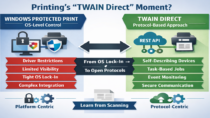
What TWAIN Direct Can Teach Us About Fixing Windows Protected Print

There’s a growing tension in enterprise print environments: the requirement for security and control versus the need for flexibility and interoperability. Microsoft’s Windows Protected Print (WPP) initiative is a clear attempt to modernize and secure printing—but like many security-first architectures, it introduces friction that organizations are now struggling to navigate.

Interestingly, we’ve already solved a very similar problem in another domain: document scanning.

That solution is TWAIN Direct.


The Core Problem: Control vs. Usability

Windows Protected Print aims to eliminate traditional print drivers, enforce stricter pipelines, and reduce attack surfaces. On paper (no pun intended), that’s exactly what IT departments want.

But in practice, it creates real challenges:

  • Vendor lock-in or limited extensibility
  • Reduced visibility into device behavior
  • Difficulty integrating with existing workflows
  • Constraints on innovation at the edge

If this sounds familiar, it should—these are the exact same problems the scanning industry faced for decades with legacy TWAIN drivers.


The TWAIN Direct Breakthrough

TWAIN Direct didn’t just “improve” scanning—it re-architected the entire model.

Instead of tightly coupling applications to device drivers, TWAIN Direct introduced:

  • A network-based, RESTful communication model
  • Self-describing devices (via capabilities)
  • Asynchronous task execution
  • Event-driven status reporting
  • Driverless operation

In short, it decoupled what you want to do from how the device does it.

That shift unlocked interoperability, observability, and innovation—all while improving security.


The Analogy: Printing Needs Its “TWAIN Direct Moment”

Windows Protected Print is trying to solve security by tightening control at the OS level. But TWAIN Direct shows us a different path:

Move intelligence to the protocol layer, not the platform layer.

Imagine if printing followed the same principles:

1. Self-Describing Printers (Capabilities Model)

Instead of rigid driver definitions, printers could expose their capabilities dynamically:

  • Supported formats
  • Finishing options
  • Security requirements

Applications adapt in real-time—no driver installation required.

2. Task-Based Print Jobs

Rather than sending opaque print streams, clients submit structured “tasks”:

  • “Print 10 copies, duplex, staple”
  • With embedded policy and validation

This mirrors TWAIN Direct’s task model and enables better auditing and control.

3. Event-Driven Observability

One of the most underrated strengths of TWAIN Direct is its eventing model:

  • Job started
  • Page scanned
  • Error occurred
  • Job completed

Apply this to printing, and suddenly WPP gains:

  • Real-time monitoring
  • Better troubleshooting
  • True device-level telemetry

4. Secure, Network-Native Communication

TWAIN Direct assumes secure HTTP-based communication from the start:

  • TLS encryption
  • Token-based authentication
  • No reliance on local drivers

This aligns perfectly with WPP’s security goals—but without sacrificing openness.


Where Windows Protected Print Falls Short

WPP is solving yesterday’s problem (driver vulnerabilities) with yesterday’s architecture (OS-level enforcement).

TWAIN Direct demonstrates that the real solution is:

  • Protocol standardization instead of platform restriction
  • Device intelligence instead of driver dependency
  • Open ecosystems instead of controlled pipelines

The Bigger Opportunity

This isn’t just about printing or scanning—it’s about how we design device communication in the age of cloud, AI, and zero trust.

TWAIN Direct proves that you can have:

  • Security
  • Simplicity
  • Interoperability
  • Observability

…without compromise.

If Windows Protected Print evolves to embrace these principles, it could become more than a security feature—it could become the foundation for the next generation of print infrastructure.


Final Thought

The scanning industry already went through this transformation—and came out stronger on the other side.

Printing doesn’t need to reinvent the wheel.

It just needs to recognize that the blueprint already exists.

It’s called TWAIN Direct.

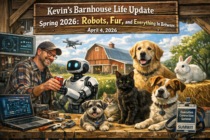
4/4/2026 Kevin’s Barnhouse Life Update — Spring 2026: Robots, Fur, and Everything In Between


Wow. 2026 has already been a whirlwind — the kind of year where you blink and wonder how you fit all this into just a few months. But in the best way, it’s been full of breakthroughs, laughter, and those little everyday moments that make you stop and smile.

On the tech side, I’ve been diving deep into twAIn Robotics — a project that started with a simple question: what if machines could actually move, sense, and think for themselves? It’s nerdy, it’s exciting, and it’s one of those experiments where you realize the future isn’t coming — it’s already here. I’ve been playing with AI, biometric identity verification, and autonomous robotics control, figuring out how to make smart software and real-world hardware work together. Even if you’re not a robotics geek, it’s fun to imagine a world where robots might eventually help with everyday things — like maybe fetching snacks during a long workday (a person can dream, right?).

What drives me most is building — not just projects or products, but an ecosystem where everyone can gain something meaningful. I’m passionate about connecting ideas, technology, and people in ways that make life easier, more fair, and more engaging. Whether it’s through robotics, writing, or experimenting with new tools, I want the things I create to ripple outward, helping not just me, but anyone who interacts with them. For me, creation isn’t just personal fulfillment — it’s about leaving a space where everyone can benefit and grow.

Earlier this year, I went to the Executive Connection Summit in Scottsdale, which was full of inspiration. From stories of veteran resilience to innovators building the next big thing, it was a reminder that curiosity never goes out of style and the world is full of opportunities if you’re willing to tinker, explore, and sometimes fail spectacularly.

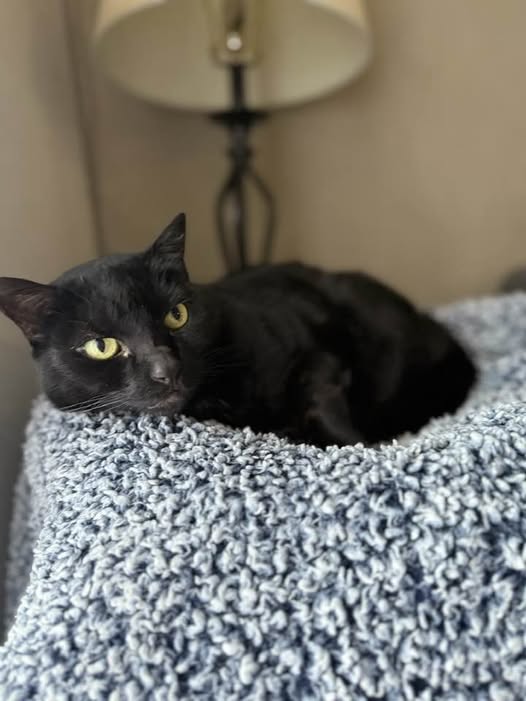
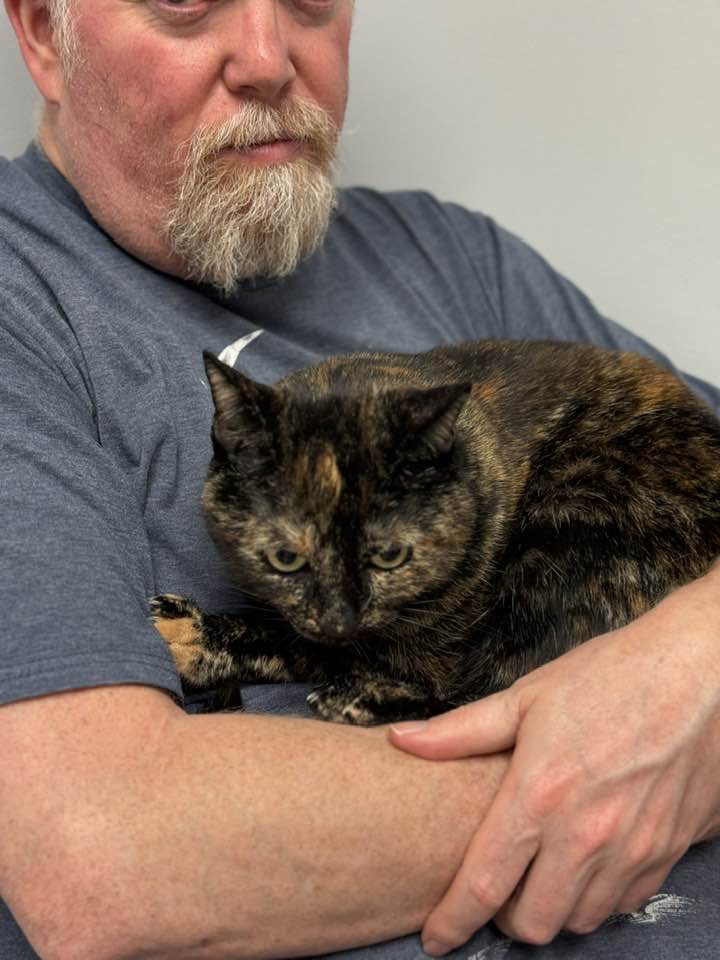
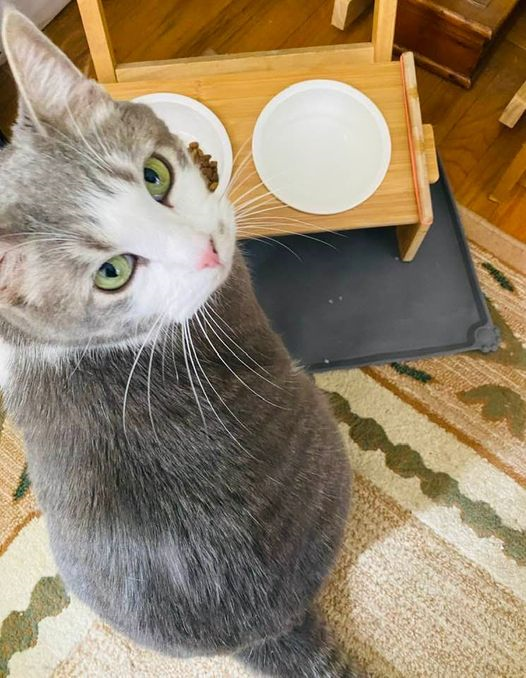
Back at the Neal Family Farmhouse, life is a mix of chaos and charm thanks to Bleu, Ella, Finn, Gracie, J.C., and Tigg. Finn’s mischief, hallway sprints, and random bursts of energy keep us laughing (and occasionally ducking). Bleu’s calm, judgmental stare, Ella’s quiet side-eye, Gracie’s nosy curiosity, J.C.’s old-soul wisdom, and Tigg’s unpredictable antics make sure there’s never a dull moment. They’ve become my co-pilots, my sounding boards, and sometimes my little saboteurs — in the best way possible.

This year also marks another chapter in my 15-year habit of blogging life as it happens. From robotics experiments to the small, silly moments at home, I’ve shared the wins, the fails, and everything in between. The goal has never been perfection — it’s about curiosity, learning, and sharing the chaos that comes with living, thinking, and sometimes tinkering just a little too much.

As we roll into the rest of 2026, I’m looking forward to more robot experiments, more quiet farmhouse moments, more antics from the six of them, and more of those little surprises that make this ride worth every blink, laugh, and head-scratch along the way.


🐾 Life at the Neal Barnhouse: Fur, Fun & a Few Plot Twists 🐾


If there’s one thing we’ve learned lately at the Neal Family Barnhouse, it’s that life is never boring when you’ve got six furry personalities running the show. 😄

Finn continues to live up to his reputation as the resident goofball, bringing a daily mix of energy, curiosity, and just enough mischief to keep everyone on their toes. His favorite hobby is still “lightly annoying his sisters until someone gives in and plays,” and somehow, he always wins. Whether he’s zooming through the house or instigating a playful standoff, Finn keeps the entire crew entertained—and maybe just a little exhausted.

Bleu remains our sleek and mysterious queen, gracefully navigating the chaos with quiet confidence. She has a way of observing everything from a distance, as if she’s analyzing each situation before deciding whether it’s worth her time. But every now and then, she surprises us with a playful burst or a perfectly timed interaction that reminds us she’s very much part of the action—just on her own terms.

Ella brings her signature tortoiseshell sass, making sure everyone remembers that she runs things (or at least strongly believes she does). Her personality is as bold as her markings, and she’s never shy about voicing her opinion or inserting herself into whatever is happening. She adds just the right amount of spice to the household dynamic.

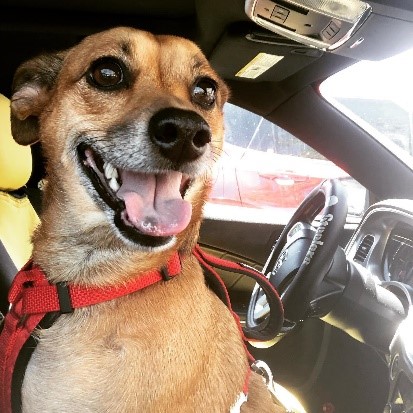
Gracie loving her car ride

Gracie, our sweet Chinweenie, continues to be the emotional heartbeat of the farmhouse. She’s always nearby, ready to offer comfort, keep watch, or step in when the energy gets a little too high. Whether she’s curled up for a quiet moment or alerting us to something she thinks we should know about (which is often 😄), Gracie brings a steady, loving presence that balances out all the feline antics. 🐶

Now for the headline act…

J.C. (Just Cat)

J.C. (“Just Cat”) has truly embraced his role as the wise and dignified elder statesman of the group. With a calm demeanor and a lifetime of experience, he moves through the house with quiet authority, rarely needing to assert himself to be respected. Having been my dad’s cat, then my mom’s, and now part of our home, J.C. carries a legacy that makes him incredibly special to us. Watching him now step into a mentor role has been both meaningful and, at times, unexpectedly funny.

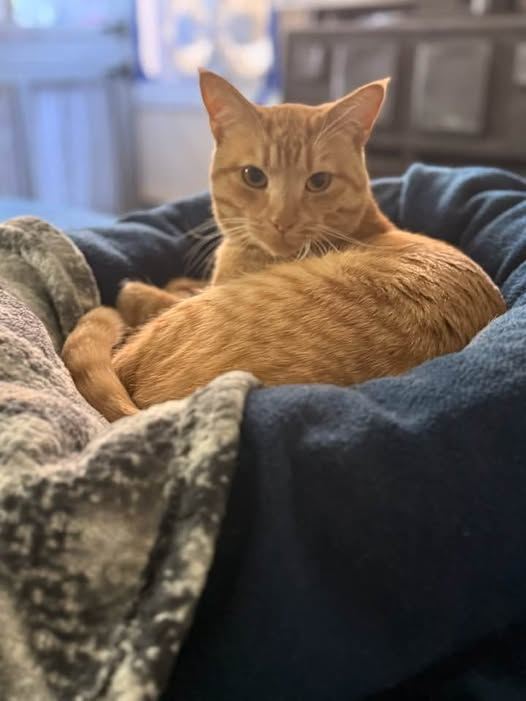
Tigg (“Monster Tiggarelas”), our once-feral orange fluff, continues to be a source of endless entertainment and amazement. Not long ago, he was navigating alley life, figuring out survival one day at a time. Now, he’s discovering toys, routines, and the joy of being part of a family. His energy is boundless, his curiosity unstoppable, and his personality larger than life.

Together, J.C. and Tigg have become the most unexpected—and entertaining—duo in the house. J.C. plays the role of patient mentor, while Tigg eagerly takes on the part of the enthusiastic (and slightly chaotic) apprentice. Watching them roam the house like they’re tethered by an invisible rope is equal parts heartwarming and hilarious. One responsible adult, one lovable brat… balance has been achieved.

From alley cat survival to full-fledged family member, Tigg’s journey has been nothing short of incredible. And seeing J.C. embrace his role as “big brother” has made it even more special for all of us.


🌱 A Little Life Update…

Behind the scenes, Brandee and I have been incredibly busy navigating both technical projects and some… let’s call them highly predictable personal surveillance.

What we can say is this: sometimes this predictable behaviour has a way of clarifying what really matters. For us, that means simplifying our lives, focusing on what’s real, and protecting the peace we’re building together.

We’re staying grounded, moving forward, and keeping our energy where it belongs: on family, purpose, and the future we’re creating.


💛 Looking Ahead

At the end of the day, this farmhouse is filled with love, personality, a little chaos, and a whole lot of gratitude.

We’re excited for what’s ahead—more memories, more milestones, and yes… probably more antics from Finn and Tigg. 😹

Stay tuned… 🐾✨