For years, enterprise IT leaders have focused heavily on cybersecurity, cloud migration, AI adoption, and digital transformation.
But underneath nearly every major IT initiative lies a massive and often underestimated problem:
Enterprise data silos.
Disconnected systems, fragmented applications, redundant integrations, incompatible platforms, and duplicated data environments have quietly become one of the largest operational cost centers in modern business.
And according to multiple studies from Gartner, IDC, and enterprise integration firms, organizations may be wasting:
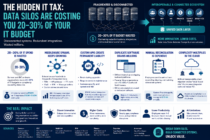
20–30% of total IT spending
…simply maintaining fragmentation.
Not innovation. Not transformation. Not competitive advantage.
Just maintaining complexity.
The Scale of Modern Enterprise Fragmentation
The average enterprise technology environment today is staggering.
According to research from MuleSoft:
- Large organizations use approximately 976 separate applications on average
- Only ~28% of those applications are integrated
- Meaning more than 70% operate in disconnected silos
This creates an environment where:
- Data must constantly be moved manually
- APIs multiply uncontrollably
- Integration layers become brittle
- Duplicate systems proliferate
- Teams lose visibility into enterprise operations
The result is what many CIOs now call:
“Integration debt.”
20–30% of IT Budgets Are Consumed by Complexity
Multiple Gartner and IDC analyses estimate organizations spend roughly:
- 20–30% of IT budgets on:
- Maintaining redundant systems
- Manual reconciliation
- Legacy middleware
- Duplicate databases
- Custom integrations
- Compatibility workarounds
- Technical debt remediation
For large enterprises, that becomes enormous.
A company spending:
- $500 million annually on IT may effectively burn:
- $100M–$150M per year just keeping fragmented systems functioning.
That is not digital transformation.
That is operational drag.
Middleware Sprawl: The “Shadow Infrastructure” Nobody Planned For
One of the fastest-growing hidden costs in enterprise IT is middleware sprawl.
Over time, organizations accumulate:
- ESBs (Enterprise Service Buses)
- API gateways
- ETL tools
- RPA layers
- iPaaS platforms
- Message brokers
- Synchronization engines
- Custom connectors
Each integration solves a short-term problem.
But collectively, they create:
- Massive operational complexity
- Licensing costs
- Security exposure
- Upgrade risks
- Vendor dependency
- Performance bottlenecks
According to IDC:
- Enterprises now manage hundreds to thousands of APIs internally
- API management and integration overhead continue growing faster than many core application budgets
And every disconnected system requires another bridge.
Custom APIs Become Permanent Liabilities
Custom integrations are often treated as assets.
In reality, many become long-term liabilities.
Organizations frequently build:
- One-off connectors
- Custom synchronization services
- Proprietary workflows
- Vendor-specific interfaces
Initially these seem efficient.
But over time:
- Upgrades break compatibility
- APIs deprecate
- Vendors change authentication models
- Data structures evolve
- Security standards tighten
This creates what analysts call:
“Fragile integration architecture”
According to IBM and Gartner research:
- Integration failures remain one of the leading causes of enterprise project overruns and operational outages
Even minor software upgrades can trigger:
- Multi-week remediation projects
- Emergency consultant engagements
- Downtime events
- Business workflow disruption
The hidden cost is not just the initial integration.
It is the perpetual maintenance burden afterward.
Duplicate Software Licensing Is a Massive Financial Leak
Data silos often lead directly to software duplication.
Different departments purchase:
- Separate CRM platforms
- Independent collaboration tools
- Duplicate analytics environments
- Overlapping workflow systems
- Multiple document repositories
- Competing cloud services
Because systems do not interoperate cleanly:
- Teams build around the fragmentation instead of fixing it
According to studies from Flexera:
- Organizations overspend billions globally on unused or redundant software licenses annually
- Many enterprises utilize less than 50–60% of purchased SaaS licenses
This creates:
- Redundant subscription costs
- Shadow IT growth
- Governance failures
- Security blind spots
- Inconsistent data models
The irony: Many enterprises are simultaneously:
- Overbuying software
- Underutilizing software
- And paying additional costs to connect overlapping tools together
Data Reconciliation Has Become a Full-Time Industry
One of the least visible but most expensive consequences of silos is manual reconciliation.
Employees spend enormous amounts of time:
- Comparing reports
- Resolving conflicting records
- Cleaning duplicated entries
- Matching inconsistent identifiers
- Correcting synchronization failures
According to research from Experian:
- Poor data quality impacts nearly every organization
- Businesses estimate data quality issues damage revenue, operational efficiency, and customer experience significantly
Meanwhile:
- Gartner estimates poor data quality costs organizations an average of $12.9 million annually
And in highly regulated industries like:
- Healthcare
- Finance
- Government
- Manufacturing
The costs become even larger due to:
- Compliance exposure
- Audit remediation
- Reporting inaccuracies
- Operational delays
Cloud Migration Often Magnifies the Problem
Ironically, many cloud transformation projects unintentionally worsen fragmentation.
Organizations frequently migrate applications to the cloud without:
- Standardizing data models
- Consolidating workflows
- Modernizing interoperability standards
The result becomes:
“Cloud-based silos”
Now enterprises must manage:
- On-prem systems
- Multi-cloud platforms
- SaaS ecosystems
- Edge devices
- Hybrid identity systems
- Legacy integration layers
All simultaneously.
According to Accenture:
- Complexity has become one of the largest barriers to achieving cloud ROI
Simply moving systems does not solve interoperability.
Sometimes it multiplies the problem.
AI Is About to Expose Every Silo
The AI era changes the economics dramatically.
Artificial intelligence systems require:
- Unified access to enterprise knowledge
- Structured data consistency
- Real-time interoperability
- Reliable identity mapping
- Clean metadata
Fragmented systems create:
- Incomplete AI context
- Poor automation reliability
- Hallucination risks
- Broken workflows
- Inconsistent outputs
In other words:
Enterprise silos are evolving from an operational inefficiency into a strategic AI limitation.
Organizations with fragmented ecosystems will struggle to:
- Deploy enterprise AI effectively
- Automate workflows
- Build trusted knowledge systems
- Scale intelligent operations
Meanwhile, interoperable organizations gain:
- Faster automation
- Better AI performance
- Lower operational overhead
- Higher workforce productivity
The Real Cost Is Opportunity Cost
The largest loss may not even appear on balance sheets.
Because every dollar spent maintaining fragmentation is a dollar not spent on:
- Innovation
- Customer experience
- Product development
- AI modernization
- Security improvement
- Workforce enablement
Data silos create a hidden tax on organizational progress itself.
And unlike many costs, this one compounds over time.
Every disconnected platform added today increases tomorrow’s integration burden.
The Future Belongs to Interoperable Ecosystems
The next generation of enterprise leaders will likely prioritize:
- Open standards
- API consistency
- Shared identity frameworks
- Portable workflows
- Interoperable architectures
- Vendor-neutral ecosystems
Because the economics are becoming impossible to ignore.
The organizations that reduce fragmentation fastest will likely gain:
- Lower operating costs
- Faster innovation cycles
- Better AI readiness
- Improved employee productivity
- Reduced technical debt
- Greater long-term agility
Final Thought
For decades, interoperability was treated as a technical feature.
Today, it is becoming a business survival issue.
The modern enterprise is no longer constrained primarily by computing power.
It is constrained by:
- Complexity
- Fragmentation
- And the growing cost of disconnected systems trying to behave like a unified business.
The hidden IT tax is real.
And many organizations are paying far more than they realize.
Sources & Research References
- Gartner — IT spending inefficiency, data quality, integration research
- IDC — Enterprise integration and middleware research
- MuleSoft — Connectivity Benchmark Reports
- IBM — Enterprise integration and operational risk studies
- Flexera — SaaS waste and software utilization research
- Experian — Data quality impact studies
- Accenture — Cloud complexity and digital transformation research